
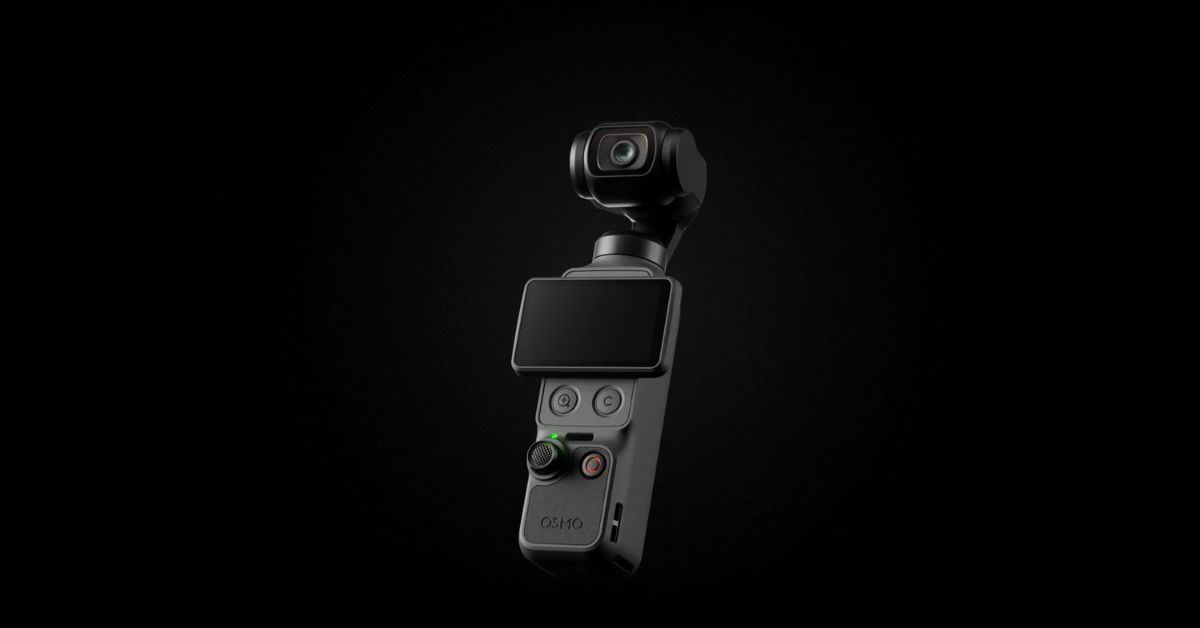
DJI Osmo Pocket 4 Review: The World's Most Powerful Pocket Camera Is Here
The wait is finally over. DJI has officially unveiled the Osmo Pocket 4, the fourth generation of its iconic pocket-sized gimbal camera — and it's making a serious claim to being the best compact camera for creators on the market. Whether you're a vlogger, filmmaker, travel content creator, or just someone who wants stunning footage without hauling around a full camera rig, the Osmo Pocket 4 deserves your full attention.
In this post, we break down everything you need to know: the specs, what's new, how it compares to the Osmo Pocket 3, and why it might be the smartest camera purchase you make this year.
What Is the DJI Osmo Pocket 4?
The DJI Osmo Pocket 4 is a 3-axis stabilized gimbal camera designed to fit in your pocket while delivering cinema-grade image quality. Building on the celebrated Osmo Pocket 3, DJI has taken an already outstanding device and refined it in nearly every dimension — from slow-motion recording and dynamic range to audio, storage, and physical design.
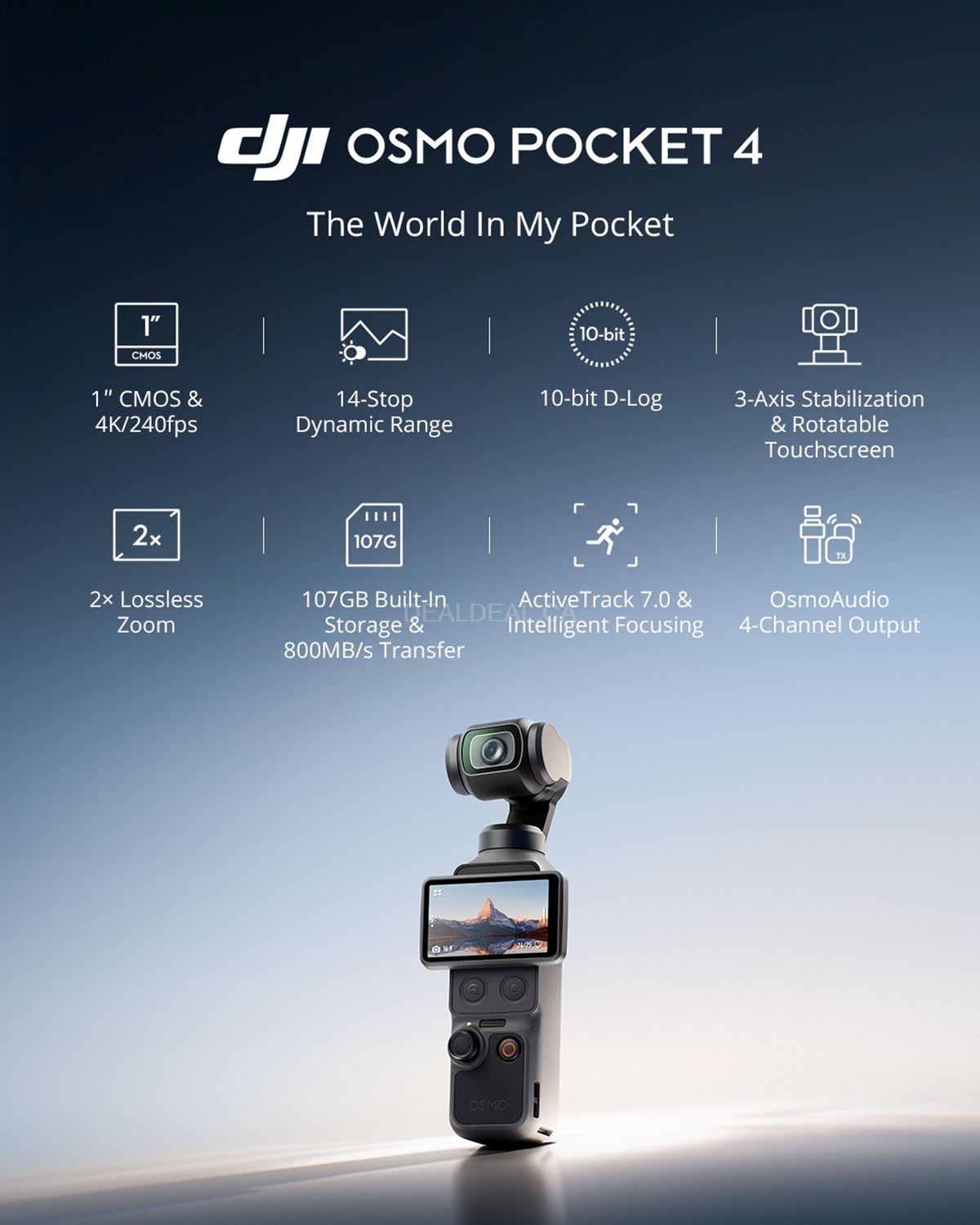
Its tagline says it all: "The World In My Pocket."
DJI Osmo Pocket 4: Full Specs at a Glance
| Feature | DJI Osmo Pocket 4 |
|---|---|
| Sensor | 1-inch CMOS |
| Lens | 20mm f/2.0 |
| Max Video Resolution | 4K / 240fps |
| Dynamic Range | 14 stops |
| Color Profile | 10-bit D-Log |
| Stabilization | 3-axis mechanical gimbal |
| Zoom | 2× lossless |
| Internal Storage | 107GB built-in |
| Transfer Speed | Up to 800MB/s (USB 3.1) |
| Subject Tracking | ActiveTrack 7.0 |
| Audio | OsmoAudio 4-channel output |
| Screen | Rotatable touchscreen |
| Connectivity | Wi-Fi 6, USB 3.1 |
| Battery | ~1,545 mAh (~200 min at 1080p/24fps) |
| Weight | ~116g |
DJI Osmo Pocket 4 vs. Osmo Pocket 3: What's Changed?
If you're a current Pocket 3 owner wondering whether to upgrade, here's a clear, honest comparison of the two generations.
1. Video Performance: A Massive Slow-Motion Leap
The headline upgrade is the slow-motion capability. The Osmo Pocket 4 doubles down on slow-mo performance with 4K recording at up to 240fps — a massive jump over the Pocket 3's 4K/120fps. If cinematic slow-motion is central to your content, this alone is a compelling reason to upgrade.
Both cameras share the same 1-inch CMOS sensor and 20mm f/2.0 lens — so the core optical DNA is unchanged. However, the Pocket 4 wrings significantly more performance from that sensor through improved processing.
2. Dynamic Range: 14 Stops vs. 10 Stops
The Osmo Pocket 3 offered respectable dynamic range, but the Pocket 4 bumps this up to 14 stops — a major improvement for shooting in mixed or challenging lighting. Combined with 10-bit D-Log color grading support, post-production flexibility is now on par with much more expensive cameras. This is a huge deal for professional creators.
3. Storage: No More Card Worrying
The Pocket 3 relied on a microSD card for storage. The Pocket 4 flips the script entirely: 107GB of built-in storage and USB 3.1 transfer speeds up to 800MB/s mean you can offload a full shoot in minutes. For most creators, this eliminates the need for external cards altogether.
4. Weight: 35% Lighter
This is a surprisingly significant upgrade. The Osmo Pocket 3 weighed 179g. The Pocket 4 comes in at approximately 116g — roughly 35% lighter — without sacrificing build quality. For all-day shooting or travel, that difference is very real.
5. Audio: OsmoAudio 4-Channel System
Audio often gets overlooked in camera reviews, but DJI has given it serious attention here. The OsmoAudio 4-channel output delivers richer, more spatially immersive sound — a step up from the Pocket 3's audio system and particularly valuable for vloggers and interview-style content.
6. Zoom: 2× Lossless
The Pocket 4 introduces 2× lossless zoom — and this appears to be hardware-enabled rather than a simple digital crop. The Pocket 3 had no meaningful lossless zoom. This is a practical addition for tighter shots without moving physically closer to your subject.
7. AI Tracking: ActiveTrack 7.0
The Pocket 3 featured ActiveTrack 6.0. The Pocket 4 upgrades to ActiveTrack 7.0, with smarter subject detection and locking. For solo creators filming themselves, this is one of the most essential features on the device.
8. Controls: New Physical Buttons
The Pocket 4 adds a dedicated zoom rocker and a programmable "C" shortcut button, both positioned for comfortable one-handed use during filming. The rotating touchscreen is also reported to be larger and brighter than the Pocket 3's.
9. Battery Life: Up to 200 Minutes
Battery life is significantly improved. At 1080p/24fps, the Pocket 4 is rated for up to 200 minutes of continuous recording — a meaningful upgrade for extended shoots.
Head-to-Head Comparison Table
| Feature | Osmo Pocket 3 | Osmo Pocket 4 | Advantage |
|---|---|---|---|
| Sensor | 1-inch CMOS | 1-inch CMOS | Tie |
| Lens | 20mm f/2.0 | 20mm f/2.0 | Tie |
| Max Slow-Motion | 4K / 120fps | 4K / 240fps | ✅ Pocket 4 |
| Dynamic Range | ~10 stops | 14 stops | ✅ Pocket 4 |
| Color Profile | 10-bit | 10-bit D-Log | ✅ Pocket 4 |
| Storage | microSD | 107GB built-in | ✅ Pocket 4 |
| Transfer Speed | USB-C (standard) | 800MB/s USB 3.1 | ✅ Pocket 4 |
| Lossless Zoom | None | 2× | ✅ Pocket 4 |
| Subject Tracking | ActiveTrack 6.0 | ActiveTrack 7.0 | ✅ Pocket 4 |
| Audio Channels | 2-channel | 4-channel | ✅ Pocket 4 |
| Weight | 179g | ~116g | ✅ Pocket 4 |
| Battery Life | ~130 min | ~200 min | ✅ Pocket 4 |
| Connectivity | Wi-Fi 5 | Wi-Fi 6 | ✅ Pocket 4 |
Who Is the DJI Osmo Pocket 4 For?
Vloggers and solo creators will love the rotatable touchscreen, ActiveTrack 7.0, and one-handed ergonomics. The 4-channel audio and D-Log support mean less time in post and better-sounding content out of the box.
Travel filmmakers will appreciate the 35% weight reduction, built-in storage (no fumbling with cards at 30,000 feet), and the improved battery life.
Professional content producers will find the 14-stop dynamic range and 10-bit D-Log profile genuinely useful on commercial shoots, delivering latitude that previously required much larger and pricier cameras.
First-time gimbal camera buyers get a complete, polished, and user-friendly package that punches well above its size and price class.
Should Osmo Pocket 3 Owners Upgrade?
This is the honest answer: it depends on how you shoot.
If slow-motion, audio quality, or weight are critical parts of your workflow, the Pocket 4 is a clear upgrade worth considering. If you shoot primarily in standard 4K at normal frame rates and you're happy with your Pocket 3's image quality, the sensor hasn't changed, so your output quality won't dramatically shift.
For first-time buyers, the Pocket 4 is an easy recommendation. There's simply no better pocket gimbal camera at this form factor and price point.
Key Takeaways
- 4K/240fps slow-motion is a major leap over the Pocket 3's 4K/120fps
- 14 stops of dynamic range and 10-bit D-Log put serious grading power in a tiny body
- 107GB internal storage with 800MB/s USB 3.1 transfer eliminates card management headaches
- 35% lighter than the Pocket 3 at approximately 116g
- ActiveTrack 7.0 and 2× lossless zoom refine the shooting experience meaningfully
- OsmoAudio 4-channel system delivers noticeably better sound for creators
Final Verdict
The DJI Osmo Pocket 4 is the most capable pocket gimbal camera ever made. It's an evolution, not a reinvention — but DJI has upgraded almost every spec that matters. The combination of cinema-grade dynamic range, ultrafast slow-motion, intelligent AI tracking, built-in storage, and a dramatically lighter body makes this one of the most exciting camera releases of 2026.
Rating: 9.5/10 — Essential for creators who want professional results in a pocket-sized package.
Where to Buy the DJI Osmo Pocket 4
Check Current Price & Pre-Order on Amazon
More images
Swipe or tap to view more photos.
Tap an image to zoom out.
Check out the full details at the source.